


Unlock Efficiency and Accuracy Through AI-Powered Automation
In an era defined by speed, data, and digital disruption, business leaders face mounting pressure to do more with less. Rising operational costs, inefficient workflows, and avoidable human errors are not just inconveniences—they’re roadblocks to sustainable growth. That’s where AI-powered automation steps in as a transformative solution.
By combining artificial intelligence with automation tools, businesses can dramatically reduce manual workload, increase operational accuracy, and scale faster than ever before. This article explores how AI powered automation works, how it differs from traditional automation, and most importantly—how it can save your business time, money, and effort.
It is the use of artificial intelligence technologies—like machine learning, natural language processing, and robotic process automation (RPA)—to automate complex tasks and decision-making processes that previously required human involvement.
Instead of relying solely on rule-based triggers, AI in automation analyzes data, learns from patterns, and evolves over time. This allows businesses to not only automate more processes but also do so intelligently.
Understanding the difference between AI vs automation is key: while automation follows fixed rules, AI brings adaptability and learning capabilities into the equation.
Businesses across industries are rapidly embracing AI to stay competitive and efficient.
According to World Economic Forum 80% of business executives say automation is a critical component of their digital transformation strategy. As this momentum grows, global spending on AI technologies is projected to reach $300 billion by 2026.
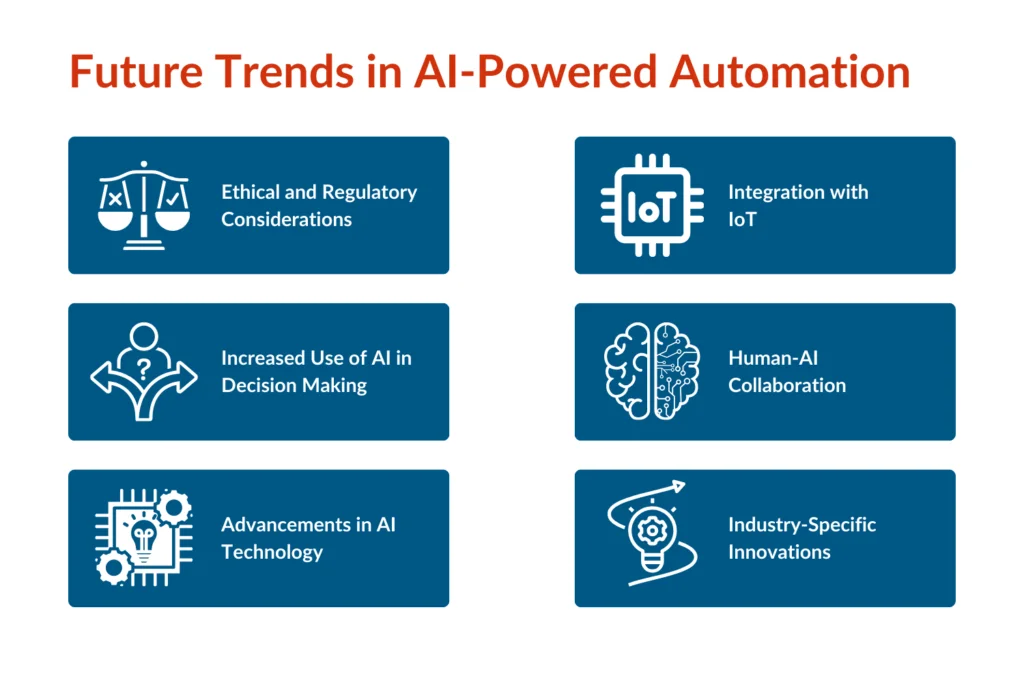
Key Components:
Artificial Intelligence (AI): Enables machines to perform tasks that typically require human intelligence, such as understanding language, recognizing patterns, and making decisions.
Machine Learning (ML): Allows systems to learn from historical data and improve task execution without explicit reprogramming.
Robotic Process Automation (RPA): Automates structured, repetitive tasks like data entry or transaction processing.
Examples of AI-Powered Automation Tools:
- UiPath: Advanced automation platform with RPA and AI capabilities.
- IBM Watson: Enterprise-grade AI for analytics, automation, and decision support.
Zapier with AI integration: A user-friendly tool that automates workflows across popular apps, now with AI enhancements.
AI vs. Traditional Automation:
While traditional automation follows static “if-this-then-that” rules, AI powered automation and scale adapt in real-time, use unstructured data, and handle exceptions, bringing a whole new level of intelligence and flexibility to operations.
The synergy between AI and automation enables businesses to not only speed up processes but also make smarter, data-driven decisions.
How AI Automation Reduces Operational Costs
High operating expenses remain a major challenge across industries, from overstaffed back offices to error-prone manual processes. AI for automation offers a practical, proven solution to cut costs without cutting quality. Organizations using AI automation experience 20–40% cost savings on average in the first year. And 42% of companies say AI helped them lower operational expenses significantly. (RandGroup)
1. Eliminating Manual, Repetitive Work
AI automation systems can take over data-heavy tasks like:
- Invoice processing
- Report generation
- Form validation
- Email sorting and response
2. Reducing Human Error
Manual processes are prone to mistakes that lead to rework, compliance penalties, and lost revenue. AI automation reduces these risks by operating with consistent precision.
A study by Accenture found that AI systems reduce human error by up to 60%, particularly in high-volume industries like finance and healthcare.
3. Cutting Labor and Time Costs
AI doesn’t need breaks, shifts, or sleep. It works 24/7 without overtime pay. That means:
- More output with fewer resources
- Shorter cycle times
- Faster service delivery
Over time, these cost savings compound, offering a substantial return on investment (ROI) for businesses of all sizes.
Real-World Example:
Coca-Cola Bottling Company Consolidated implemented AI-powered automation to streamline its invoice processing system. By combining optical character recognition (OCR) with robotic process automation (RPA), they reduced invoice processing time by 75%, saving hundreds of labor hours each month and significantly cutting operational costs.
How AI Automation Boosts Accuracy
Accuracy isn’t just about doing things right; it’s about making better decisions, serving customers reliably, and protecting your brand’s reputation. Businesses report a 35% improvement in data accuracy after implementing AI-based automation. Here’s how it enhances accuracy at scale.
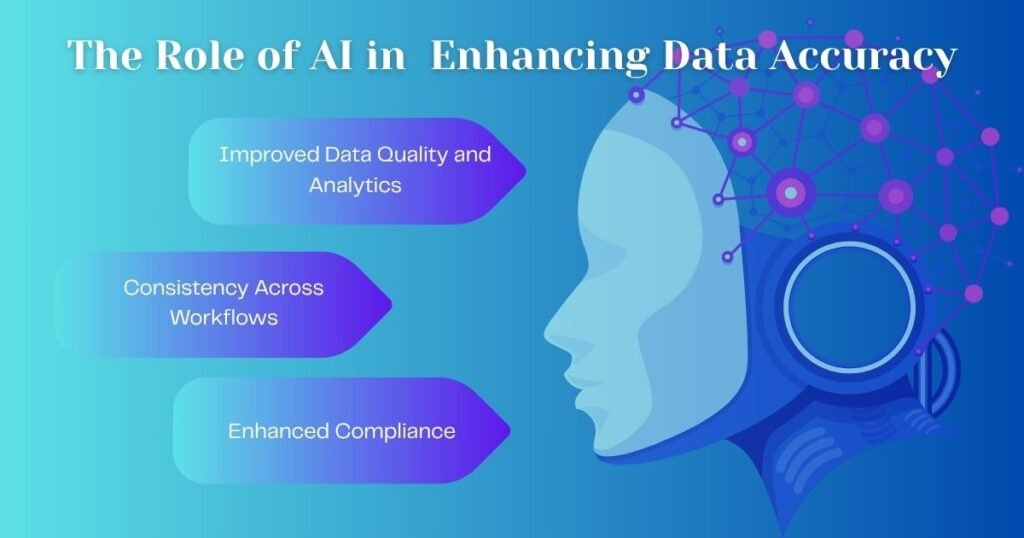
1. Better Data
AI algorithms validate, clean, and standardize data before it enters your systems, leading to better reporting, smarter insights, and fewer downstream errors.
In the digital service sector, this can dramatically improve marketing targeting, sales forecasting, and customer retention.
2. Reliable Workflows
Unlike humans, AI systems don’t have off days. Every task is executed the same way, every time, whether it’s routing customer support tickets or flagging fraud risks.
Example: A global e-commerce platform used AI-based automation to handle product categorization. Accuracy rose from 76% to 98%, improving customer navigation and reducing returns.
3. Built-in Compliance
Many industries require strict adherence to rules and documentation. AI in automation helps organizations stay audit-ready by:
- Logging every action
- Generating compliance reports automatically
- Monitoring for anomalies in real time
This is especially valuable in finance, insurance, and healthcare, where non-compliance can result in massive fines or reputational damage.
Practical Strategies to Get Started with AI Automation
Companies that implement AI automation see 3x faster ROI compared to traditional automation tools. And are you ready to bring AI-powered automation into your business? Here’s a roadmap for doing it smartly and successfully.
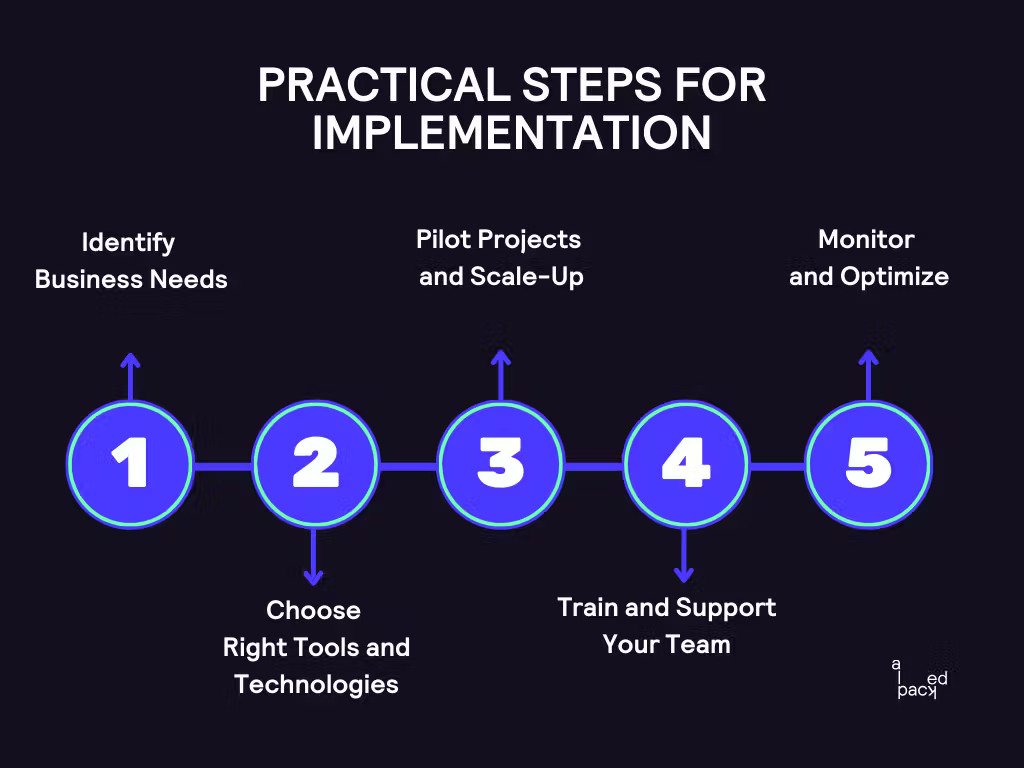
1. Identify High-Impact Opportunities
Start by auditing your current workflows. Look for processes that are:
- High-volume
- Rule-based
- Time-consuming
- Error-prone
For example, customer onboarding, payroll processing, or inventory updates are often ripe for AI-driven automation.
2. Evaluate the Right Tools
There’s a growing market of AI automation tools, from no-code platforms like Zapier to enterprise systems like Salesforce Einstein. Some are purpose-built for industries (e.g., healthcare AI, HR tech), while others are customizable.
Even small businesses can find budget-friendly options to get started. Look for solutions that are:
- Scalable
- User-friendly
- Secure
- Integrable with your current stack
Modern platforms now allow even non-technical teams to automate AI into existing workflows, making intelligent automation more accessible than ever
3. Start Small
Avoid trying to automate everything at once. Choose one process, define your success metrics, and pilot it. This lowers risk and builds confidence across the team.
4. Upskill and Communicate
Introduce change gradually. Train your staff on how AI works, what to expect, and how it will improve—not replace—their roles. Internal resistance is one of the top barriers to successful implementation.
5. Measure ROI
Use key performance indicators (KPIs) to track results:
- Cost reduction
- Task completion time
- Error rates
- Customer satisfaction
Review and refine regularly to ensure long-term scalability.
Real-World Use Cases for AI-Powered Automation
Still wondering where AI powered automation fits in your industry? Here are real examples across verticals:
1. Customer Support
AI chatbots handle FAQs and triage complex issues to the right agents. Natural language processing enables smoother, more human-like interactions.
2. Invoice and Expense Management
AI scans receipts, extracts data, and matches it to financial records. Cuts down on fraud and bookkeeping errors.
3. Inventory and Supply Chain
Predictive algorithms forecast demand, manage reorder points, and optimize warehouse space. AI automation in logistics reduces stockouts and excess inventory.
4. Marketing Automation
AI personalizes email campaigns, social media ads, and product recommendations. Platforms like HubSpot and Marketo use machine learning to schedule and optimize messages based on engagement data.
5. Predictive Maintenance
In manufacturing, sensors and AI detect wear and tear before breakdowns happen. Saves thousands in unexpected downtime and repairs.
Sector-Specific Examples:
Finance: Credit scoring, fraud detection
HR: Resume screening, onboarding emails
Healthcare: Patient scheduling, diagnostic support
These examples prove that AI-powered automation and scale go hand in hand, whether you’re a lean startup or an enterprise organization.
Conclusion
AI-powered automation is redefining how businesses operate—delivering faster, smarter, and more cost-effective outcomes. From reducing overhead and improving accuracy to enabling growth with fewer resources, the advantages are both immediate and long-term.
Whether you’re a business executive, operations manager, or entrepreneur, the first step is the same: assess your processes, identify automation opportunities, and take action.
FAQs
What is AI-powered automation, and how does it work?
It’s the integration of artificial intelligence and automation to perform tasks with minimal human intervention. AI learns from data, while automation executes workflows. Together, they reduce manual effort and improve efficiency.
Can small businesses afford AI automation tools?
Yes. Many tools offer free trials, pay-as-you-go plans, or open-source options. Zapier, Make, and ChatGPT-based integrations are cost-effective for startups and SMEs.
What are the first steps to implement AI in operations?
Audit your current processes. Choose one repetitive, rule-based task. Research tools, test with a pilot project, and measure the impact.
How do I measure ROI from AI-powered automation?
Track cost savings, reduced error rates, time saved, customer satisfaction improvements, and employee productivity before and after implementation.
What’s the difference between AI automation and traditional automation?
Traditional automation follows static rules. AI automation uses learning algorithms, making it adaptable and capable of handling complex, unpredictable tasks.